Understanding the Telehandler
What is a Telehandler?
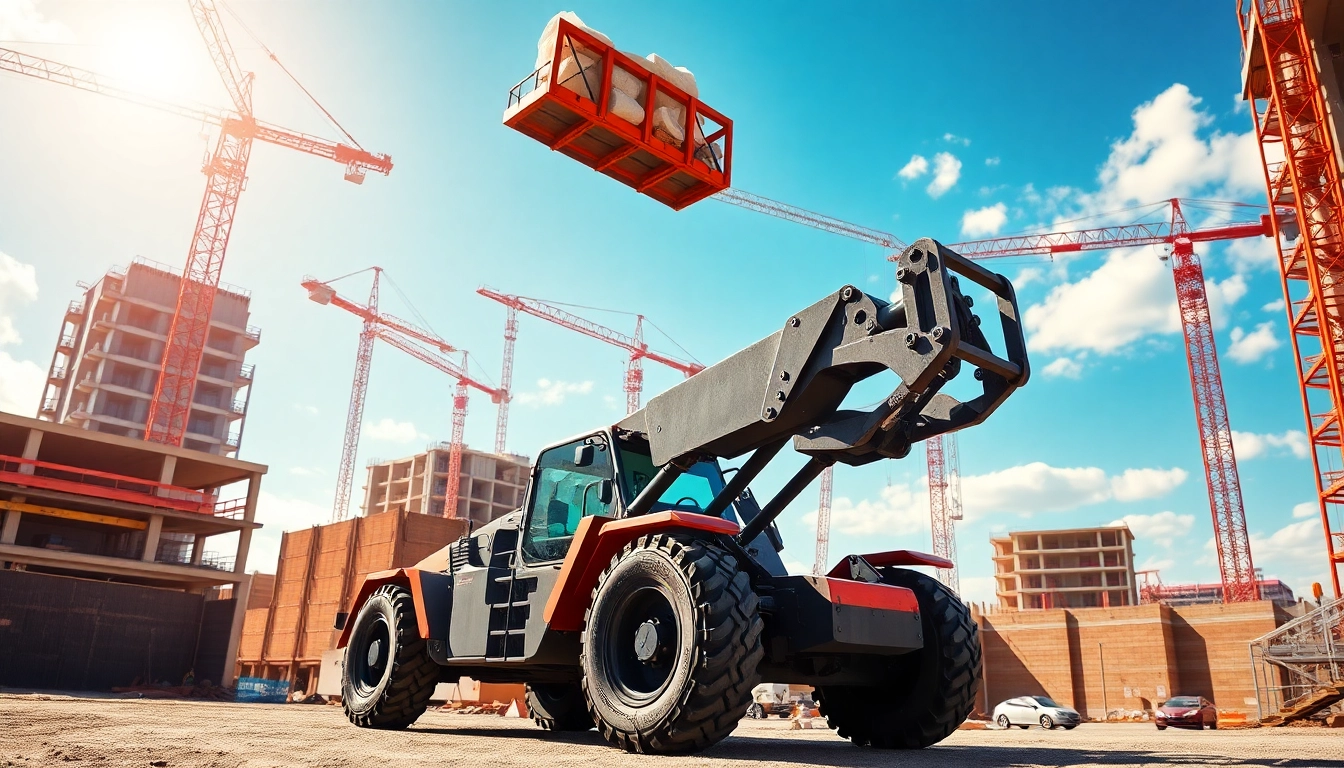
A telehandler, or telescopic handler, is a versatile piece of equipment used primarily in construction and agriculture for material handling. Its standout feature is its extendable arm, which provides not only lifting capabilities but also the option to reach over obstacles and into hard-to-access places. This machinery bridges the gap between a forklift and a crane, often referred to as a “forklift on steroids” due to its enhanced capabilities, such as lifting heavy loads at varying heights, making it an indispensable tool on job sites.
Key Features of Telehandlers
Telehandlers come with a range of features that enhance their utility on the work site, including:
- Extendable Boom: Allows for lifting materials to considerable heights and distances.
- Attachments: Compatible with various attachments such as forks, buckets, and jibs for diverse applications.
- Four-Wheel Drive: Provides superior maneuverability and stability on uneven terrain.
- Load Sensing Technology: Indicates load weight in real-time, enhancing safety and operational efficiency.
- Compact Design: Many models are designed to fit into tight spaces while offering robust capabilities.
Common Applications in the Industry
Telehandlers are utilized across a multitude of industries, including construction, agriculture, and industrial warehousing. Common applications include:
- Moving heavy materials on construction sites.
- Stacking and unloading pallets in warehouses.
- Feeding materials to mixers or other equipment in agriculture.
- Assisting in maintenance tasks by lifting workers to elevated areas.
- Landscaping and gardening projects, especially in areas with rough terrain.
Benefits of Using a Telehandler
Improving Productivity on Site
Utilizing a telehandler can significantly increase productivity on job sites by reducing the amount of time spent on lifting and moving materials. Its ability to reach great heights and travel across various terrains allows operators to complete tasks more efficiently, thus shortening project timelines. Moreover, the versatility of attachments allows for multiple functions, removing the need for several specialized machines.
Versatility Across Different Projects
The multifunctionality of telehandlers makes them ideal for a variety of applications, ranging from lifting bricks on construction sites to handling bales in agricultural settings. With the right attachments, a telehandler can adapt to any task, which saves costs on renting or purchasing additional equipment.
Enhanced Safety Features
Safety is of utmost importance in any job site. Modern telehandlers are equipped with advanced safety features such as load management systems, stability controls, and protective cabins protecting operators in case of rollover incidents. These features help mitigate risks, ensuring a safer working environment.
Choosing the Right Telehandler
Factors to Consider Before Purchase
When selecting a telehandler, several factors must be taken into account to ensure optimal performance and suitability for specific job conditions:
- Load Capacity: Evaluate the maximum weight the telehandler needs to lift.
- Reach Height: Consider the maximum height required for your projects.
- Attachment Compatibility: Ensure the telehandler can accommodate attachments necessary for your work.
- Terrain Type: Select a model suited for the specific ground conditions it will be operating on.
- Budget: Factor in both the purchase and operational costs to select a model that meets your financial constraints.
Top Telehandler Models Comparisons
Various telehandler models are available on the market, each boasting unique specifications suitable for different applications. Here are a few popular models analyzed against criteria such as load capacity, reach, and efficiency:
- Model A: 5,500-pound capacity, 17-foot reach, excellent for indoor operations.
- Model B: 8,000-pound capacity, 20-foot reach, suitable for medium construction tasks.
- Model C: 12,000-pound capacity, 30-foot reach, designed for heavy-duty construction and landscaping.
Cost vs. Value Analysis
Understanding the cost versus the value of a telehandler is essential in making an informed decision. While the initial payout might be high, consider the long-term savings from increased productivity, reduced hired labor, and the capability to handle multiple tasks with a single machine. Assessing how a telehandler fits into overall project timelines and efficiency will determine its value in the long run.
Best Practices for Telehandler Operation
Operator Training and Certification
It is crucial that operators receive proper training and certification before using a telehandler. Skilled operators can maximize the equipment's capabilities while minimizing the risk of accidents. Training should cover machine operation, attachment handling, and safety protocols.
Regular Maintenance Tips
Routine maintenance is key to ensuring the longevity and efficient operation of a telehandler. Key maintenance practices include:
- Checking hydraulic fluid levels and topping up as necessary.
- Inspecting the tires for proper inflation and wear.
- Conducting regular safety checks on lifting mechanisms.
- Cleaning filters and replacing them according to the manufacturer's guidelines.
- Monitoring daily operational hours to plan for servicing schedules.
Safety Protocols to Follow
Implementing strict safety protocols when operating a telehandler can prevent accidents on site. These protocols include:
- Conducting pre-operation inspections of the machine.
- Using proper PPE (Personal Protective Equipment).
- Establishing clear communication among team members during operations.
- Avoiding overloading the telehandler beyond its capacity.
- Ensuring stability and proper positioning before lifting loads.
Future Trends in Telehandler Technology
Innovations on the Horizon
As technology evolves, so do telehandlers. Innovations such as improved hydraulic systems, enhanced telematics for performance monitoring, and more efficient engine technologies are emerging. These advancements are focused on increasing productivity while decreasing environmental impact.
Impact of Automation and AI
The integration of automation and AI in telehandlers represents a significant leap forward. Automated controls can enhance precision in load handling, reducing the likelihood of human error and improving overall site safety. AI can analyze operational data to suggest improvements and optimize workflow processes.
Environmental Considerations for New Models
With a growing emphasis on sustainability, manufacturers are focusing on creating telehandlers that use cleaner energy solutions, such as electrification and hybrid systems. This aligns with industry goals of reducing carbon footprints and complying with increasingly stringent environmental regulations.
Frequently Asked Questions
How does a telehandler differ from a forklift?
A telehandler offers more versatility with its extendable arm, allowing for greater reach and lifting capability compared to a traditional forklift.
What weight can a telehandler lift?
Telehandlers can typically lift between 2,500 to 12,000 pounds, depending on the model and configuration.
Can telehandlers be used on rough terrain?
Yes, many telehandlers are designed with four-wheel drive and extendable axles, making them suitable for rough and uneven terrains.
Is operator training necessary for using a telehandler?
Yes, operator training is crucial for ensuring safe and effective use of telehandlers on work sites.
Why are telehandlers preferred in construction?
Their versatility, ability to lift heavy loads, and maneuverability make telehandlers ideal for diverse construction projects.